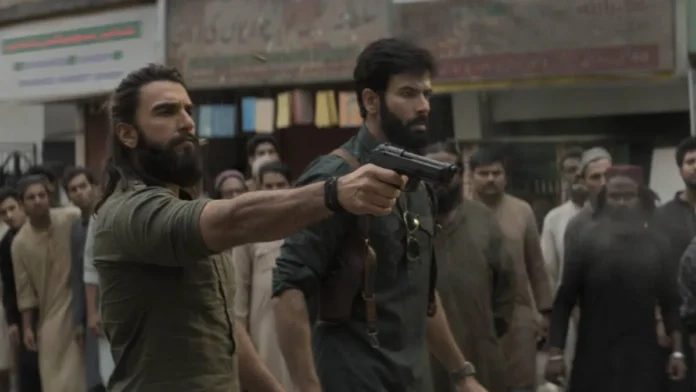
Dhurandhar brings realism back to Indian spy movies with intense performances and fearless storytelling that refuses to sugarcoat geopolitical truth. Check out if it is a movie worth watching.
-Robin Bhuyan
Dhurandhar, which released on 5th December 2025, has not just gained a lot of hype and excitement, but it instantly stood out as one of the most ambitious Indian films in recent years. Directed by Aditya Dhar, the spy action thriller features a powerhouse cast with Ranveer Singh, Akshaye Khanna, R. Madhavan, Sanjay Dutt, Arjun Rampal and Sara Arjun.
The story is set within a dangerous covert operation that brings together political tension, human loss and the messy reality of modern conflict. Dhurandhar presents itself as a grounded spy drama instead of a colourful fairytale version of espionage. It aims for authenticity instead of fantasy.
Read our review to know why Dhurandhar is a wake up call for Indian cinema and why it reminds us that big scale cinema does not require hollow storytelling.
Story and Realism
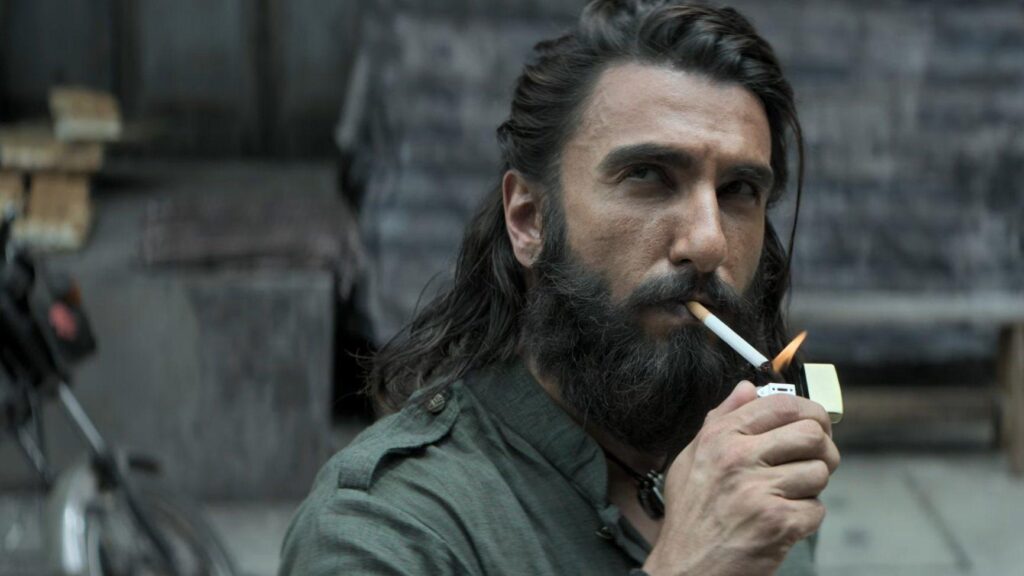
Most spy movies try to impress us with spectacle rather than substance. Dhurandhar goes in a different direction. The film builds its world through quiet details and carefully structured tension. It avoids the shortcuts that often turn thrillers into cartoons. Instead it focuses on how agents operate, how intelligence failures happen and how violence leaves permanent marks on the people involved. The narrative moves slowly at first but the rhythm is intentional. You can feel the weight of planning, the risks of infiltration and the unpredictability of being a spy. The film shows the journey of Hamza Ali or Jasikrat Singh, and how much they have to wait and endure before they can even get close to their mission. Dhurandhar is a wake up call for Indian cinema because it respects the intelligence of its audience. It trusts viewers to stay with the story without being spoon-fed.
The most surprising achievement of the film is how gripping it feels despite its enormous length. Instead the runtime becomes an advantage to introduce all the characters with style. The film uses the extra space to build relationships, tension and silence. It also stays completely focused on its core plot instead of taking detours into dreamy love songs or glamorous holiday sequences, unlike what some typical spy films do. Dhurandhar is a wake up call for Indian cinema because it proves that realism can be entertaining when handled with confidence. Even people who usually find long movies tiring will discover themselves glued to the screen.
What also separates Dhurandhar from most other spy movies is its refusal to romanticise espionage. Yes, the film has violence but it is not choreographed to look pretty. The intelligence work is not dressed up. There is no magical software that solves every mystery. It feels like a film made by someone who understands both the stakes and the ethical complications of this world. That level of honesty is rare. And it works.
Performances and Casting
The performances are one of the strongest pillars of Dhurandhar. Ranveer Singh delivers a controlled and surprisingly mature performance. He avoids the loud mannerisms that often dominate his roles. Instead he plays a man who has lived through too much pain and too many secrets and has learned to survive by swallowing every emotion. When the breaks finally happen in the story, his reactions feel earned. If Ranveer chooses to lean more in this direction rather than his chaotic public persona, his acting career will only benefit.
R. Madhavan delivers a sharp and focused performance as Ajay Sanjyal, a man driven entirely by justice and patriotism. His character’s loyalty to the nation is absolute and Madhavan plays that conviction with quiet strength. Sanjay Dutt, on the other hand, gets a far more layered role as SP Chaudhry Aslam. He is not written as a simple good or evil figure. His decisions come from pressure, fear and survival, and he portrays that internal conflict with surprising restraint.
Arjun Rampal steps in as Major Iqbal of ISI and his presence is genuinely menacing. He brings a cold and threatening energy that raises the stakes every time he appears on screen. The chemistry across the cast feels organic and the emotional weight never feels forced. This shows that the casting directors did a terrific job as every actor fits their role perfectly. This is one of those rare ensemble films where every supporting actor genuinely strengthens the story.
Akshaye Khanna: The Silent Dominance
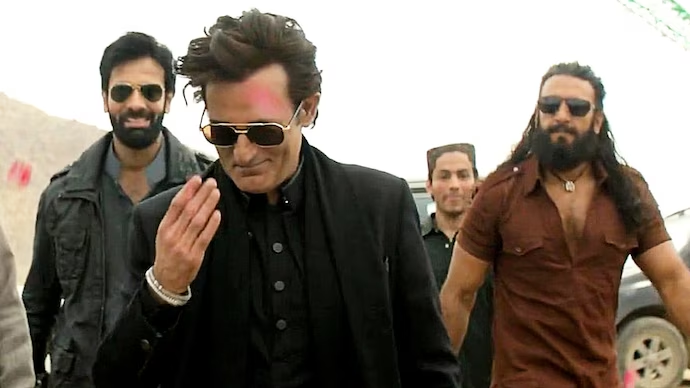
Akshaye Khanna who played the role of Rehman Dakait, walks into this film and quietly takes control of every scene he appears in. He does not need dramatic punches or theatrical speeches. His power lies in the smallest gestures. Every glance and every pause communicates more than entire pages of dialogue. Khanna has always been one of India’s most naturally gifted actors. The only reason he has remained underrated is because mainstream cinema used to value actors with a “star presence” and rarely creates roles that match his intelligence as a performer.
Now that Indian audiences are far more exposed to international cinema, their understanding of acting has evolved. They know the difference between noise and nuance. They recognise craft even when it is quiet. This is why Akshaye Khanna is finally getting the appreciation he deserved decades ago.This is another reason Dhurandhar is a wake up call for Indian cinema regarding what true performance looks like. Khanna became the heart of the film without ever demanding attention, and even overshadowed the lead hero Ranveer Singh.
A Contrast to YRF Style Spy Films
One of the clearest differences between Dhurandhar and the usual mainstream spy movies becomes obvious when you think of the YRF spy universe. That set of films exists in a cheerful alternative reality where India and Pakistan are shown as almost equal partners. The threat of terrorism is softened into a generic enemy. RAW and ISI conveniently team up like two friendly super agencies fighting a third villain who appears out of nowhere. The emotional stakes are polished until they lose all resemblance to the world we live in.
Dhurandhar rejects this approach entirely. It does not pretend the geopolitical situation is a balanced dance. It does not create imaginary partnerships that ignore decades of real conflict. It does not shrink the difficult truths, nor is the film afraid to show it. Kudos to Aditya Dhar and the team for this!
Instead the film confronts the problems directly. That honesty may make some viewers uncomfortable but it gives the film a seriousness that the YRF style of spy movies does not even attempt. Dhurandhar is a wake up call for Indian cinema because it shows how powerful stories can become when they stop sugarcoating reality.
Some ‘”critics” who usually celebrate fantasy level spy stories suddenly found themselves uncomfortable because Dhurandhar refuses to dilute reality for their convenience. The same voices that praise glossy fiction were surprisingly rattled when a film chose honesty instead of escapism. They also find the story to be “too masculine”. Really hard to understand what their problem with masculinity is. Their reaction says more about their limited worldview than about the film itself, because Dhurandhar simply shows what they prefer not to acknowledge.
Direction
Aditya Dhar approaches Dhurandhar with confidence and patience. He does not rush scenes for quick excitement. He lets tension build naturally. His earlier work already hinted at his ability to blend action with human drama but here he reaches a new level. He understands that spy stories are not about gadgets and explosions. They are about psychology, trust and the consequences of every decision. His direction balances intimacy with scale. The world feels large but the characters stay at the center. This clarity of vision is what keeps the film engaging even during its slower portions.
Music and Technical Craft
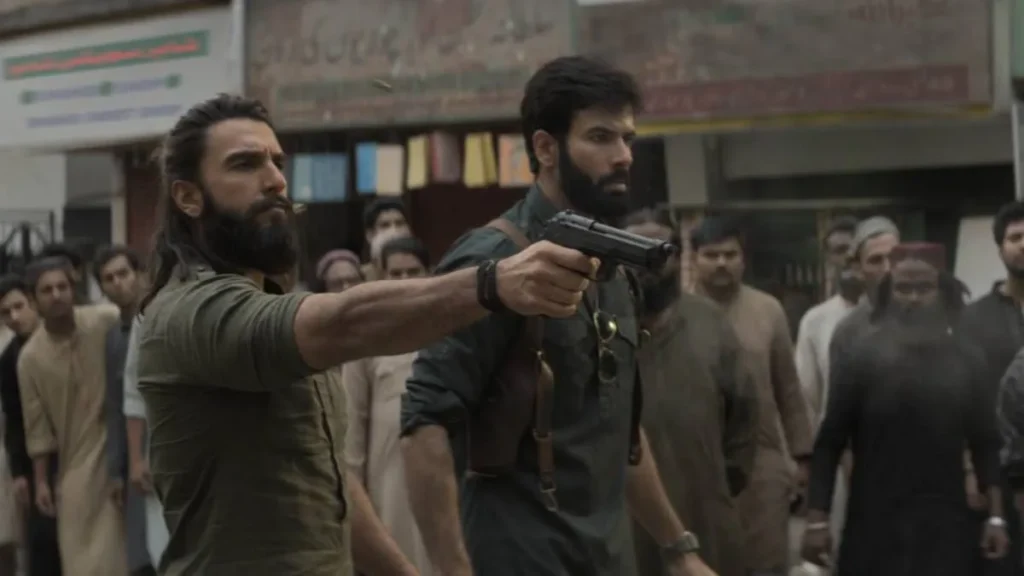
Shashwat Sachdev’s music supports the film without overwhelming it. Instead of loud background cues, the score uses restraint. The sound design is especially strong because it gives scenes a lived in quality. The cinematography captures both the chaos of conflict zones and the loneliness of characters who operate in shadows. Nothing looks flashy for the sake of looking flashy. Every technical choice is tied to the story.
The editing deserves mention because maintaining tension for more than three hours is extremely difficult. Yet the film rarely slows down or bores you. The cuts are timed to keep the emotional pressure on the audience. This level of focus is rare in Indian thrillers. It shows what a production can achieve when storytelling is prioritised over formula.
Should you watch Dhurandhar?
Is the film good? Storywise and from technical aspects, yes. At the same time the film might not be for everyone, as it is not a mass entertainer… and the length is not ideal for everyone either.
Overall, if you want to see a realistic and honest spy action thriller film, and you don’t mind the violence, then Dhurandhar is definitely worth a watch!
Rating: 9 out of 10 stars
